

Here’s a scenario we see all the time: a dentist decides they want more new patients, so they hire a marketing company to run some Google Ads. The company launches a campaign, sends over some analytics reports, and the dentist has no idea what any of it means. They don’t know if it’s working. They don’t have a system in place to track where their leads are coming from. And after a few months of writing checks with nothing to show for it, they walk away with a bad taste in their mouth and a deep distrust of marketing altogether.
Sound familiar? You’re not alone, and the good news is, it doesn’t have to be this way.
Marketing your dental practice isn’t just about throwing money at ads. It’s about combining smart outsourcing with hands-on internal strategies, and then actually tracking whether it’s all working. Let’s break it down.
Table of Contents
- What You Should Outsource
- What You Can (and Should) Do Yourself
- The Piece Most Dentists Miss: Tracking Your ROI
- Don’t Forget the Phones: Your Conversion Rate Matters
- The Bottom Line
What You Should Outsource
Some things genuinely require professional help. These are the areas where hiring the right company is worth the investment, as long as you’re holding them accountable.
Google Ads and Facebook Ads
Running paid advertising is not a set-it-and-forget-it situation. It requires constant monitoring, creative development, copywriting, audience targeting, budget management, and ongoing adjustments based on performance data. That’s a full-time job, and it’s not yours.
Hire a reputable company to manage your paid campaigns, but stay involved. We’ll talk more about how to monitor your ROI later, because this is where most dentists lose money without realizing it.
Your Website

Most dentists don’t know how to build a website, and that’s perfectly fine. This is absolutely something to outsource. But here’s the key: you need to provide the right assets and make sure the finished product actually converts visitors into patients.
Your website should include before-and-after photos, detailed information about your services, and something we’ve seen work extremely well: short videos from the doctor on each services page explaining the procedure, what patients can expect, and common recovery timelines. Think about the questions patients ask you during treatment presentations. Those are the exact questions people are Googling before they ever pick up the phone. Answer them on your site.
And perhaps most importantly, every single page needs a prominent call to action. A big, unmissable “Book Your Appointment” button with a new patient special, not just on the homepage, but on every page. If a visitor lands on your implants page, reads through the information, and decides they’re ready to take the next step, they shouldn’t have to hunt for how to contact you.
Listing Platforms (Yelp, Zocdoc, etc.)
Platforms like Yelp and Zocdoc can work, but results vary significantly by location. In some markets, they generate a solid flow of new patients. In others, they’re a money pit. Our recommendation: prioritize Google and Facebook ads first, along with the organic strategies we’re about to cover. If you still have budget left and want to experiment, then consider these platforms, but watch the numbers closely.
What You Can (and Should) Do Yourself
Here’s where things get exciting, because these strategies are either free or very low-cost, and they can have a massive impact on your new patient numbers.
Social Media Content
 We’re not talking about paid ads here. We’re talking about organic content. You should be posting consistently on Facebook, Instagram, and yes, even TikTok.
We have several clients right now who are generating a significant number of new patients from TikTok alone, posting short videos about office culture, funny behind-the-scenes moments, and day-in-the-life content. The best part? It takes about 10 to 15 minutes a week to record a batch of clips. Have your team brainstorm a list of ideas, shoot the videos on an iPhone (it doesn’t need to be a professional camera) and send them to an affordable editor to polish and post.
On Facebook and Instagram, post everything that makes your practice feel human: before-and-after photos, team birthday celebrations, staff lunch outings, pictures of happy patients (with permission, of course), kids picking prizes out of the treasure box after their appointment. This kind of content does something that no ad can do. It makes your practice feel real and relatable.
Here’s why this matters: potential patients are researching you before they ever call. They’ll look at your website, then check your Facebook page, then scroll through your Instagram. They want to get a sense of who you are and what it would feel like to walk through your door. Give them a reason to choose you.
Online Reviews
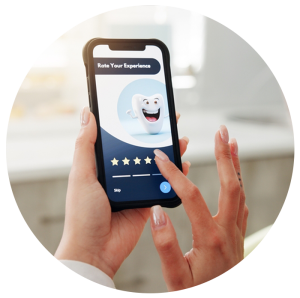 You can run the best ad campaign in the world, but if a potential patient clicks through to your Google Business listing and sees a three-star rating with a handful of reviews, they’re going somewhere else.
Think of it like buying a product on Amazon. If you see one listing with five stars and two reviews, and another with 4.8 stars and ten thousand reviews, which one are you buying? The same psychology applies to choosing a dentist.
Make asking for reviews a part of your daily routine. Turn it into a team challenge. Whoever gets the most reviews this week wins a small reward. Keep it fun and low-stakes. Maybe the doc buys the team Starbucks on Friday if you hit your weekly goal. We’d advise against tying large monetary bonuses to reviews (save those for production-based incentives), but a little friendly competition goes a long way.
Referrals
This is one of the most underutilized growth strategies in dentistry. You need to be actively asking for referrals, and you need to make it easy for patients to send people your way.
Print referral cards and hand them out, especially after a big procedure. If a patient just walked out with a brand-new smile after an implant case, they’re thrilled. That’s the perfect moment to hand them a card and say, “If you know anyone who’s looking for a dentist, we’d love to take care of them.”
Your front desk should be asking at checkout, too. A simple “Is there anyone in your family or circle of friends who might be looking for a dentist?” can go a long way. You’d be surprised how often you’ll hear something like, “Actually, my husband still needs to find a dentist since we moved here.” That’s two or three new patients from a single conversation, and you can sometimes get them scheduled right then and there.
Community Outreach
Get your team out into the community. Volunteer at a local food bank. Sponsor a neighborhood event. Set up a booth at a community fair. Give away toothbrushes, offer a drawing for a free whitening, and get people signed up as new patients on the spot.
Take lots of photos at every event and post them on your social media. When the community sees your team out there having fun and giving back, it builds trust and goodwill that no ad budget can buy.
RELATED VIDEO: 🎥 Dental Marketing – Should you hire or DIY?
The Piece Most Dentists Miss: Tracking Your ROI
All of these strategies, paid and organic, are only as good as your ability to measure whether they’re actually working. And this is where the vast majority of dental practices drop the ball.
Set Up a New Patient Call Log
When someone calls your office for the first time, your team needs to capture three things: their name, their phone number, and how they heard about you. Every time. No exceptions.
At the end of each week or month, review that log. If you’re spending five to ten thousand dollars a month on Google Ads but only seeing two or three new patient calls, something needs to change. Go back to your marketing company with that data and have a real conversation about what’s working and what isn’t.
This doesn’t need to be complicated. Most patients are perfectly happy to tell you how they found you. It’s not a weird question. A quick “By the way, how did you hear about us?” is all it takes.
Go Beyond Call Volume: Track Treatment Acceptance
Here’s the advanced move that separates practices that grow from practices that plateau: don’t just track how many new patients each marketing channel brings in. Track which channels produce patients who actually accept treatment plans.
You might find that Google Ads generate a high volume of calls, but those patients tend to shop around and don’t commit to treatment. Meanwhile, Facebook might bring in fewer leads, but nearly all of them move forward with care. That’s incredibly valuable information, because it tells you where to shift your budget for the highest return.
🎧RELATED PODCAST: How Much Should You Spend Marketing Your Dental Practice?

Don’t Forget the Phones: Your Conversion Rate Matters
There’s one more critical piece to this puzzle, and it’s one that can make or break everything else on this list. If your front desk isn’t converting incoming calls into scheduled appointments, every dollar you spend on marketing is wasted.
The national average conversion rate for dental offices is just 23 percent. That means more than three out of four potential new patients who call are hanging up without booking. And it’s usually not because your receptionist is a bad employee. It’s because they haven’t been trained on how to handle these calls effectively.
If you’d like to find out how your front desk is performing, we offer a free Mystery Call. We’ll call your practice posing as a potential new patient, take the conversation right up to the point of scheduling, and then grade the interaction. We’ll call you back with the results, let you know exactly where your team excelled and where there’s room for improvement, and provide you with our phone scripts guide so you can start training immediately.
The Bottom Line
Dental marketing doesn’t have to be a black hole for your budget. The practices that win aren’t necessarily the ones spending the most. They’re the ones combining smart outsourcing with consistent internal effort, tracking their results, and making adjustments based on real data.
Everything we’ve covered here is tried and true. Resist the temptation to chase every shiny new marketing trend that comes along, and focus on executing these fundamentals well. The results will follow.


No Comments
Be the first to start a conversation